Leave Your Message
0%

Wall-hung bidet toilets are really changing the game when it comes to how people think about space, hygiene, and bathroom comfort. You know, their hidden cisterns help keep walls looking cleaner, and since they come with built-in bidet functions, there's less need for extra fixtures. Honestly, this setup works great in tight apartments, fancy hotels, and accessible bathroom designs.

Industry reports back this up too. For instance, Fortune Business Insights says that the global smart toilet market hit about USD 8.47 billion in 2023 and might reach around USD 29.18 billion by 2032. And Grand View Research points out that rising awareness around hygiene, renovations, and the growing trend of smart homes are really pushing this growth. Just a heads up, these numbers cover the whole smart toilet market, not just wall-mounted ones—so that’s an important detail.

As Steve Jobs famously said, “Design isn’t just how it looks or feels. It’s how it works.” That totally applies here, except with bathroom tech, there are practical stuff you need to think about. Things like how easy it is to install, water pressure, electrical safety, cleaning, and local plumbing standards all matter. So, don’t just go on marketing claims—you’ve got to test it yourself.

In this guide, we’ll look at China’s top wall-hung bidet toilet manufacturers—their product engineering, ceramic quality, flushing power, certifications, customization options, export know-how, and after-sales support. Names like TOTO, Kohler, JOMOO, Huida, and Arrow are worth comparing carefully—not just ranking them based on what you see online. Sometimes, a manufacturer may look super impressive on their website but have limited technical info available—that’s a red flag. The best supplier isn’t necessarily the biggest; it’s the one that consistently delivers reliable performance, clear specs, and good support throughout your project.

All in all, choosing the right wall-hung bidet toilet is about more than just looks—it's about understanding the details and making sure they’ll actually perform well for the long haul.
China Top 10 Wall Hung Bidet Toilet Manufacturers?

Definition and Key Features of Wall-Hung Bidet Toilets

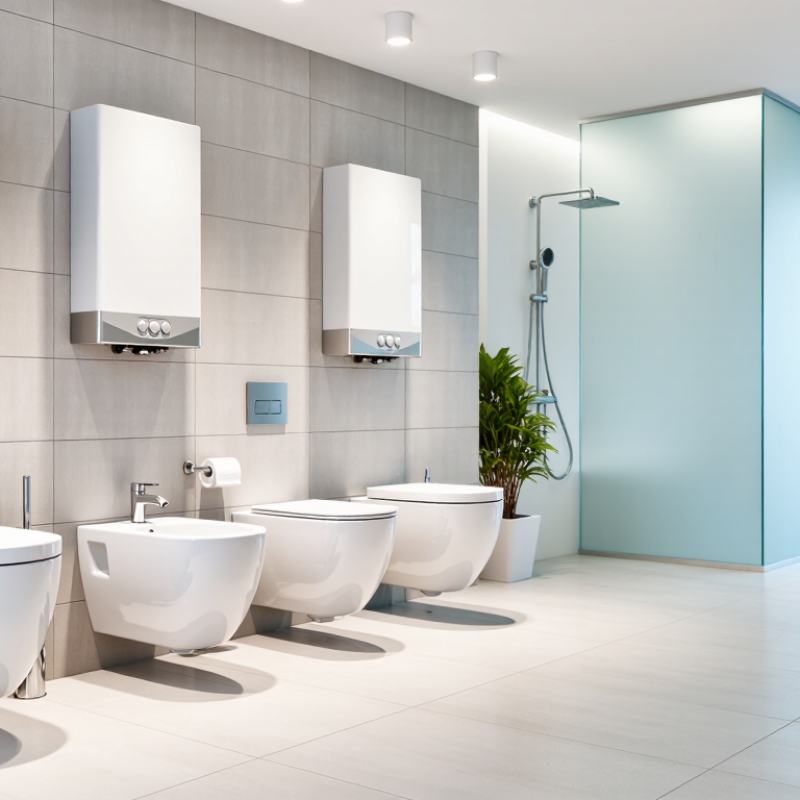
A wall-hung bidet toilet combines a suspended toilet bowl with an integrated washing system. The bowl attaches to a concealed steel carrier, while the cistern sits inside the wall. This creates a floating appearance and leaves the floor easier to clean. A bidet nozzle usually provides adjustable water pressure, temperature, and position. Heated seats, warm-air drying, deodorization, night lights, and automatic flushing are common features.

The design also responds to water and hygiene concerns. The U.S. Environmental Protection Agency reports that toilets use nearly 30% of indoor household water. Efficient dual-flush systems can reduce unnecessary consumption, although actual savings depend on user settings and installation quality. The WHO and UNICEF Joint Monitoring Programme reported that 3.5 billion people lacked safely managed sanitation in 2022. That figure keeps sanitation engineering highly relevant, even in premium bathrooms.

A good wall-hung bidet toilet needs more than attractive functions. Check the carrier’s load rating, service opening, electrical protection, cleaning cycle, and replacement-part availability. Water pressure matters. Weak pressure may reduce washing comfort. A concealed cistern can also make repairs slower and more expensive. That trade-off is easy to underestimate. During product evaluation, installers should test flushing noise, nozzle reach, seat stability, and emergency manual operation. The sleekest model is not always the most practical choice. Industry market reports often highlight smart functions, but long-term reliability deserves equal attention.

China Top 10 Wall Hung Bidet Toilet Manufacturers? - Definition and Key Features of Wall-Hung Bidet Toilets
No. Key Feature or Specification Typical Market Data Why It Matters Recommended Verification Point
1 Product Definition A wall-hung bidet toilet combines a toilet bowl with bidet-washing functions and is suspended from a concealed wall frame rather than standing directly on the floor. Creates a cleaner visual appearance and leaves the floor easier to access for cleaning. Confirm that the bowl, concealed carrier frame, flush plate, water connections, and bidet controls are compatible as one installation system.
2 Overall Bowl Dimensions Common bowl width: 350–380 mm; projection from the finished wall: 520–600 mm. Determines bathroom space requirements and clearance in front of the toilet. Use the finished-wall projection, not only the ceramic bowl depth, when preparing the bathroom layout.
3 Seat Height Typical finished seat height: 400–480 mm from the floor; comfort-height installations are often around 430–480 mm. Influences sitting comfort, accessibility, and ease of standing. Check the adjustable height range of the concealed carrier frame and account for finished floor thickness.
4 Flushing Performance Common configurations include dual flush volumes of approximately 3/6 L or 3/4.5 L; pressure-assisted and siphonic designs are also used. Efficient flushing can reduce water use while maintaining bowl-clearing performance. Review verified flush-test results, trapway design, drainage compatibility, and the minimum required water pressure.
5 Bidet Washing Functions Typical functions include posterior washing, feminine washing, adjustable water pressure, adjustable water temperature, nozzle positioning, and oscillating or pulsating spray. Provides personal-cleaning options and allows users to adjust the wash to their preferences. Confirm independent control of water pressure, temperature, nozzle position, and wash mode.
6 Heating System Electronic models commonly provide heated water, a heated seat, and warm-air drying. Electrical versions are generally designed for either 110–120 V or 220–240 V, depending on the target market. Improves comfort but requires suitable electrical planning and protection. Check rated voltage, power consumption, plug or hard-wiring method, residual-current protection, and bathroom electrical-zone requirements.
7 Hygiene and Odor Control Common hygiene features include self-rinsing nozzles, removable nozzle tips, antibacterial seat materials, pre-mist or bowl-wetting functions, and activated-carbon deodorization. Helps reduce direct contact, residue, and unpleasant odors during use. Verify which parts are genuinely self-cleaning, which require manual cleaning, and how replacement filters or nozzle parts are serviced.
8 Concealed Carrier Frame Steel carrier frames commonly support at least 400 kg in tested installations, with adjustable fixing points and a concealed cistern behind the finished wall. Transfers the user load to the structure and keeps the cistern and pipework out of sight. Confirm the tested load rating, wall or floor anchoring method, frame adjustment range, and access opening for maintenance.
9 Materials and Durability Toilet bowls are normally made from vitreous china or sanitary ceramic with a glazed surface; seats are commonly made from polypropylene or urea-formaldehyde-based materials. Material quality affects stain resistance, cleaning convenience, impact resistance, and long-term appearance. Ask for glaze quality information, seat load testing, hinge durability data, and replacement-part availability.
10 Standards and Installation Compatibility Depending on the destination market, relevant references may include EN 997, EN 1717, ASME A112.19.2/CSA B45.1, local plumbing codes, and applicable electrical-safety requirements. Compliance documentation supports safer installation and helps avoid problems during inspection or project approval. Request current test reports, declarations of conformity, plumbing connection sizes, drainage outlet position, and installation instructions for the destination country.
Figures shown are typical industry ranges for wall-hung bidet toilets and concealed installation systems. Actual dimensions, water consumption, electrical ratings, test methods, and compliance requirements may vary by product configuration and destination market.

How China’s Wall-Hung Bidet Toilet Industry Has Developed

China’s wall-hung bidet toilet industry has moved from luxury experimentation toward practical bathroom renovation. The shift follows urban upgrading, smaller apartments, and demand for easier cleaning. China’s National Bureau of Statistics reported a 16.7% decline in completed residential floor space in 2023. This pushed manufacturers toward replacement projects and compact products. Bidet Toilet Wall Hung systems now combine concealed tanks, ceramic bowls, heated seats, drying functions, and adjustable washing modes.

Industry data also shows this market is still developing. All View Cloud reported steady growth in China’s smart-toilet retail sales during 2023, with online channels supporting product discovery and price comparison. The China Household Electrical Appliances Association has highlighted rising demand for intelligent bathroom appliances and improved domestic supply chains. Compliance with GB 38448-2019 has also encouraged better control of water efficiency and energy use. Yet product quality is uneven. Some units look advanced, but installers still report drainage errors, weak access panels, and difficult maintenance.

Tips: Check wall thickness, drainage position, water pressure, and service access before purchase. A concealed cistern needs accurate installation. Small mistakes become expensive later. Buyers should also verify cleaning performance, seat heating stability, noise levels, and spare-part availability. The industry is improving, but not every “smart” function adds real value. Practical testing still matters more than a long feature list.

Criteria for Ranking the Top 10 Chinese Manufacturers

Ranking China’s top 10 wall hung bidet toilet manufacturers requires more than showroom appearance. A credible assessment should examine factory experience, engineering depth, testing records, and after-sales performance. The 2024 Grand View Research smart toilet report identifies connectivity, hygiene functions, and water efficiency as major market drivers. These factors should guide the evaluation, not replace it.

Production capability should receive 25% of the score. Auditors should verify monthly capacity, ceramic firing controls, assembly lines, and spare-part availability.

Engineering and product testing deserve 20%. This includes leak tests, flushing cycles, seat-load tests, heating stability, and failure records.

Compliance receives another 20%. Reviewers should check applicable Chinese standards, export certifications, electrical safety reports, and documented quality systems. ISO 9001 certification helps, but it cannot prove every product performs reliably.

Evidence matters most.

Export experience and installation support can account for 15%. A manufacturer serving different water pressures and bathroom layouts shows stronger practical knowledge.

Quality consistency deserves 15%, based on sampling rather than one perfect unit.

The final 5% should measure transparency, including factory access, test data, warranty terms, and complaint handling. The WHO and UNICEF Joint Monitoring Programme reports that billions still lack safely managed sanitation, reminding buyers that hygiene technology must remain practical and accessible. No scorecard is flawless. I would recheck rankings after twelve months of field feedback, because polished specifications sometimes hide ordinary failures.

Top 10 Wall-Hung Bidet Toilet Manufacturers in China

China’s top 10 wall-hung bidet toilet manufacturers are often judged by engineering depth, production control, and after-sales reliability. The strongest factories usually combine sanitary ceramic production with electronic bidet assembly. They test concealed tanks, heating elements, spray nozzles, and remote controls before shipment. A dependable China Wall Hung Bidet Toilet should also offer stable flushing, quiet operation, easy cleaning, and accessible replacement parts.

Leading manufacturers differ in their practical strengths. Some focus on high-temperature ceramic firing and precise glaze surfaces. Others specialize in smart functions, including warm seats, adjustable water pressure, night lighting, and odor control.

Several experienced OEM factories support custom colors, packaging, software languages, and installation layouts. Buyers should inspect factory audit records, sample test reports, warranty terms, and spare-part availability. A showroom alone proves little.

Real performance appears during installation. Check whether the carrier frame fits common wall cavities, whether the service panel opens easily, and whether the toilet remains stable after repeated use. Water pressure can expose weak flushing design. Hard water can reveal poor nozzle materials. Some manufacturers still provide attractive samples but inconsistent production batches. That weakness deserves attention. Clear communication, traceable inspections, and honest technical drawings matter more than polished sales language. A careful comparison of the top ten suppliers can reduce installation delays and costly replacements.

Product Technologies and Design Differences Among the Manufacturers

China’s top wall hung bidet toilet manufacturers differ mainly in flushing systems, water control, and installation engineering. Some use rimless bowls with wide centrifugal flows to reduce hidden residue. Others focus on siphonic flushing, which lowers noise but may need stronger water pressure. In factory audits, I check flush performance, leakage points, ceramic thickness, and spare-part access. Small details matter.

Smart models often combine heated seats, adjustable washing, warm air drying, deodorizing filters, and night lighting. Better designs separate electrical parts from water channels. This reduces service risk near the concealed cistern. Temperature sensors should react smoothly, not switch suddenly during use. That sounds basic. It is not always consistent.

Design differences become clearer after installation. Narrow bowls suit compact bathrooms, while deeper bowls provide better splash control. Some manufacturers offer hidden bidet nozzles and removable covers for easier cleaning. Others prioritize minimalist plates with mechanical buttons, which may remain usable during power interruptions. An OEM Wall Hung Bidet Toilet program can also adjust seat height, nozzle position, ceramic color, and packaging. However, customization may weaken quality control if every detail changes. I have seen attractive prototypes fail because the mounting frame flexed or the access panel was too small. Reliable suppliers document water pressure ranges, electrical testing, installation tolerances, and replacement procedures before mass production.

Quality Standards, Certifications, and Manufacturing Capabilities

China Top 10 Wall Hung Bidet Toilet Manufacturers: Quality Standards, Certifications, and Manufacturing Capabilities

Evaluating China’s top ten wall hung bidet toilet manufacturers requires more than comparing product photos. Reliable factories should operate under ISO 9001 quality systems, with documented inspections for ceramics, valves, electronics, and final assembly. For export models, buyers should verify applicable CE, RoHS, EMC, and water-efficiency requirements. Certification scope matters. A certificate covering a factory may not cover every toilet model.

Manufacturing capability is equally important. Strong producers often control ceramic casting, high-temperature firing, glazing, metal-frame fabrication, injection molding, and electronic assembly. Automated spray lines can improve surface consistency, while CNC equipment helps maintain concealed carrier dimensions.

Each unit should receive water-leak, flushing, heating, grounding, and electrical safety tests. Ask for batch records, calibration reports, and traceable serial numbers. Small details reveal factory discipline.

Do not trust polished samples alone.

An experienced audit should examine dust control, warehouse humidity, spare-part storage, and worker training. Independent laboratory reports can confirm performance, but they cannot replace production audits. Certification also has limits; it may not predict long-term sensor failure or seal deterioration.

Some factories provide excellent prototypes yet struggle with stable mass production. Others have strong output but weak documentation. This is where careful sampling, repeat testing, and clear corrective-action records become essential.

The ideal supplier is not merely certified. It can prove consistent performance under real installation conditions.

How to Select the Right Chinese Wall-Hung Bidet Toilet Manufacturer

How to Select the Right Chinese Wall-Hung Bidet Toilet Manufacturer

Selecting a Chinese wall-hung bidet toilet manufacturer requires more than comparing online prices. Request factory videos, production photographs, and a live video inspection. Check whether the facility controls ceramic forming, glazing, electronic assembly, and final testing. A reliable supplier should explain water pressure requirements, flushing performance, seat heating, and installation dimensions clearly. Vague answers deserve caution.

Ask for a working sample before placing a Wholesale Wall Hung Bidet Toilet order. Test the flush, nozzle movement, drying function, remote response, and noise level. Measure the mounting frame and drainage position against your project drawings. Also inspect packaging. A cracked ceramic bowl or loose electronic panel can create expensive delays. One overlooked detail is replacement access. Confirm the availability of valves, remotes, sensors, and seat components for several years.

Request quality records, inspection procedures, and relevant product certifications for your target market. Verify them independently, rather than trusting scanned files alone. Discuss production capacity during peak seasons, lead times, payment stages, and warranty handling in writing. Factory experience matters, but communication matters too. I once treated a low quotation as a strong advantage; it later revealed thinner packaging and weaker after-sales support. That mistake still influences my supplier evaluations. A smaller manufacturer may deserve consideration if its testing is transparent and its engineers respond with precise drawings. Be careful. The cheapest option is not always the safest.

FAQS

What is a wall-hung bidet toilet?

It combines a suspended toilet bowl with an integrated washing system. The bowl connects to a concealed steel carrier. The cistern stays inside the wall.

Why do people choose this toilet design?

The floating bowl leaves more floor visible. Cleaning around it becomes easier. It also suits compact bathroom renovations.

Which features are commonly included?

Common features include adjustable washing, heated seating, warm-air drying, deodorization, night lighting, and automatic flushing. More features do not always mean better performance.

Can a wall-hung bidet toilet reduce water use?

An efficient dual-flush system can reduce unnecessary consumption. Actual savings depend on user settings and installation quality. Water efficiency should be tested, not simply advertised.

What should installers check before installation?

Check wall thickness, drainage position, water pressure, and service access. Confirm the carrier’s load rating and the concealed cistern’s opening. Small measurement errors become expensive later.

Is maintenance difficult with a concealed cistern?

Repairs can take longer because the cistern sits inside the wall. A large, accessible service panel helps. Spare-part availability matters greatly.

How does water pressure affect performance?

Weak pressure may reduce washing comfort and flushing strength. Test nozzle reach, spray stability, and flushing during installation. Pressure problems are easy to underestimate.

What quality details should buyers inspect?

Inspect ceramic surfaces, seat stability, nozzle materials, electrical protection, and cleaning cycles. Hard water can expose weak materials. A showroom sample proves very little.

Are smart functions always worth paying for?

Not necessarily. Stable flushing, quiet operation, safe heating, and easy maintenance matter more. A long feature list can distract buyers from basic reliability.

What should buyers request from a manufacturer?

Request technical drawings, sample test reports, warranty terms, factory inspection records, and spare-part information. Ask about emergency manual operation. Clear documents reduce installation delays.

Conclusion

This article provides a practical overview of China’s Wall Hung Bidet Toilet industry, beginning with the definition, structure, and key features of these space-saving bathroom products. It explains how the industry has developed through improvements in ceramic production, concealed installation systems, smart controls, water-saving functions, hygiene technologies, and modern bathroom design. The article also introduces a clear framework for evaluating leading Chinese manufacturers, including product quality, engineering capability, innovation, production capacity, customization services, export experience, and after-sales support.

In addition, the article compares differences in technology, design, materials, user comfort, installation requirements, and intelligent functions among ten representative manufacturers without focusing on brand promotion. It discusses relevant quality standards, testing procedures, certifications, and manufacturing capabilities that buyers should review before cooperation. Finally, it offers practical guidance for selecting the right supplier based on target markets, project requirements, budget, product performance, compliance needs, delivery reliability, and long-term service support.
Sophia

Sophia

Sophia is a dedicated marketing professional at Guangdong Oulu Sanitary Ware Co., Ltd., where she showcases her expertise in the sanitary ware industry. With a deep understanding of the company’s innovative product range, she passionately communicates the unique features and benefits of each item......
Previous Top 10 Siphonic One Piece Toilets for Global Buyers