When you look at the global market for automatic toilet seats, it’s clear that there’s more to it than just touchless controls. Sure, features like reliable sensors, comfy heating, easy cleaning, and fitting installation are important, but the real story is in daily use. A product might seem impressive on paper, but how it performs day in and day out really counts.
Thinking about it from a human-centered design perspective, expert Don Norman points out something pretty interesting: “Good design is actually a lot harder to notice than poor design.” For an automatic toilet seat, that means things like the lid opening just right, controls that don’t confuse you, and surfaces that are easy to keep clean. These little details are huge whether you’re at home, in a hotel, or using a public bathroom. The thing is, Norman isn’t making toilet seats himself, so his advice should help guide your thinking, not replace trying out the product yourself.
This overview covers 10 brands that have products or expertise relevant to these high-tech seats — names like TOTO, Kohler, Roca, LIXIL, Panasonic, Coway, American Standard, Villeroy & Boch, Brondell, and Bio Bidet. We look at their product range, how comfortable they are to use, hygiene features, installation needs, and what kind of after-sales support they offer. Keep in mind, no single review can rank every bathroom scenario. A seat that's perfect for a new hotel might not suit an older home, and specs don’t always show how a control feels in a dim bathroom or how easy it is to clean a hinge.
So, these little differences matter. Before making a purchase, double-check dimensions, compatibility with your existing setup, and whether the model you want is available locally. Shopping for a high-tech toilet seat isn't just about specs — it’s about finding the right fit for your needs."
Definition and Scope of Automatic Toilet Seats
Definition and Scope of Automatic Toilet Seats
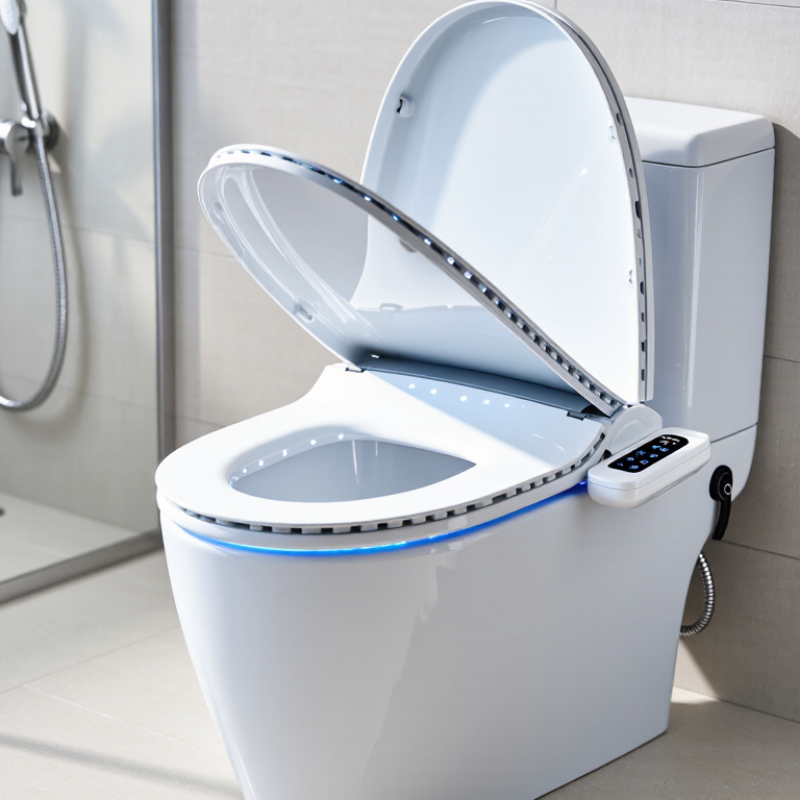
An automatic toilet seat is a retrofit or integrated toilet component that uses powered functions to improve washing, drying, opening, or temperature control. Common features include a heated ring, a warm-water nozzle, adjustable spray settings, and sensor-activated lid movement. Some models also provide air drying or deodorization. The exact feature set varies, so the term should not be treated as a single technical standard. That distinction matters.
For a manufacturer comparison, scope should include the seat assembly, control interface, sensors, water connection, and electrical requirements. It should also distinguish an automatic seat from a complete smart toilet, which may combine the bowl and seat in one unit. Not every seat qualifies. An Automatic Bidet Toilet Seat, for example, generally emphasizes washing functions, while “automatic” may also refer to powered opening or heating. Buyers should check bowl shape, mounting dimensions, water pressure, and access to a suitable outlet before comparing products.
Market data offers useful context, but not a precise count of seat makers. Grand View Research estimated the global smart toilet market at about US$8.5 billion in 2023 and projected 12.2% annual growth from 2024 to 2030. That category includes more than seats, so applying its figures directly to automatic toilet seats would overstate the evidence. The boundary is not always neat. A careful definition makes product specifications and market claims easier to assess.
Top 10 Automatic Toilet Seat Manufacturers Worldwide - Definition and Scope of Automatic Toilet Seats
Scope overview of common automatic toilet-seat technologies; rows describe product functions, not a ranked list of companies.
| No. |
Scope dimension |
Definition or included function |
Typical implementation |
| 1 |
Product definition |
An automatic toilet seat is an electrically powered seat or seat-and-cover assembly with one or more automated functions. |
Commonly installed on a compatible toilet bowl; some products are integrated into a one-piece smart toilet. |
| 2 |
Warm-water washing |
A water-cleaning function delivered through a retractable nozzle, often with user-adjustable spray settings. |
Water may be heated in a storage tank or by an on-demand heating system, depending on the product design. |
| 3 |
Heated seat |
An electric heating element warms the seat surface, usually with selectable temperature settings. |
May include temperature control or an energy-saving setting that reduces heating when the seat is not in use. |
| 4 |
Warm-air drying |
A fan directs heated air for drying after the washing function. |
Availability, airflow settings, and temperature controls vary by model. |
| 5 |
Automatic lid or seat movement |
A motorized mechanism opens or closes the lid, the seat, or both without manual lifting. |
Activation may use a proximity sensor, a remote control, or another user input, depending on the design. |
| 6 |
Sensor-based operation |
Sensors detect user presence or movement to trigger selected functions. |
Sensor-controlled features can include lid movement or automatic flushing on products designed to support them. |
| 7 |
Deodorization |
An integrated air-treatment feature reduces toilet-bowl odors by drawing air through a filter or treatment component. |
The system may activate automatically during use; filtration type and replacement requirements vary. |
| 8 |
Cleaning and hygiene functions |
Design features support cleaning of the nozzle or nearby surfaces, such as a self-rinsing nozzle cycle. |
Specific cleaning cycles and materials differ; these features do not replace routine bathroom cleaning. |
| 9 |
Controls and user settings |
Controls let users select available functions and adjust settings such as water pressure, spray position, or temperature. |
Controls may be mounted beside the seat, provided on a handheld remote, or integrated into a panel. |
| 10 |
Installation and utility scope |
Installation generally requires a compatible bowl, a water connection for washing models, and an electrical supply for powered functions. |
Fit, water connection, electrical requirements, and applicable safety standards should be checked for the specific product and market. |
Key Technologies Used in Automatic Toilet Seats
Automatic toilet seats combine occupancy sensors, heated-seat controls, wash nozzles, and air-drying systems. Infrared sensors detect when someone approaches, while thermostats regulate seat and water temperatures. Small pumps control wash pressure; filters may reduce odors. These features depend on reliable electronics and careful nozzle placement. Looks are not proof. A polished panel can hide uneven heating or awkward controls.
Grand View Research’s 2024 Smart Toilet Market report valued the broader global market at about US$9.4 billion in 2023 and forecast 12.6% annual growth through 2030. That figure covers smart toilets, not automatic seats alone, so it should not be read as a seat-market estimate. For manufacturers, the engineering challenge is balancing comfort, hygiene, durability, and standby power use. Sensor placement matters: a unit that opens at the wrong moment feels less intelligent. China Automatic Toilet Seat suppliers also need consistent checks for temperature accuracy, spray stability, and moisture protection. These are practical quality indicators, though they do not replace independent product testing.
Tips: Test the seat with different users and room temperatures. Check whether controls remain clear when wet, and whether the nozzle retracts fully after use. Small details reveal weak design.
Criteria for Ranking Leading Global Manufacturers
A credible comparison of automatic toilet seat manufacturers should begin with verifiable product evidence, not polished catalog language. We would examine published specifications for seat dimensions, heating levels, water pressure, drying options, and rated service life. Details matter. A control panel that is readable beside a dim bathroom mirror may be more useful than a long feature list. Rankings should also distinguish standard functions from optional accessories, since configurations vary by market and model.
Manufacturing capability deserves equal weight. Relevant indicators include documented quality-management processes, component traceability, production consistency, and inspection records—not factory size alone. After-sales support can be assessed through warranty clarity, replacement-part availability, installation guidance, and response channels. Independent certifications and test reports should be checked for scope and date; a logo alone proves little. Not enough.
Sustainability claims need similar scrutiny, including water and energy figures tied to stated test conditions. User feedback can reveal recurring issues, but it should be treated cautiously because reviews may reflect different installation conditions. No scoring system is perfect. Weighting durability more heavily than design, for example, may disadvantage a capable specialist. Publishing criteria and evidence sources makes the ranking easier to question and improve.
Regional Overview of the Automatic Toilet Seat Industry
Regional demand for automatic toilet seats varies with housing, plumbing, and consumer habits. Grand View Research estimated the global smart toilet market at about US$8.4 billion in 2023, with Asia Pacific holding the largest regional share. Its forecast projected 11.6% annual growth from 2024 to 2030. These figures cover smart toilets broadly, not automatic seats alone, so they are useful context rather than a direct seat-market measurement. Definitions matter.
In Asia, dense cities and new residential construction support demand for integrated functions such as heated seats and warm-water cleansing. North American buyers often weigh retrofit compatibility, while European projects may prioritize water and energy efficiency. These are broad patterns, not rules; local building standards and bathroom layouts can change purchasing decisions. For an OEM Automatic Toilet Seat program, manufacturers should check voltage, water connections, hinge spacing, and service access in each target region. A seat that fits a showroom display may not fit older housing stock.
Tips: Request region-specific installation samples and test them with local plumbing. Check replacement-part availability, too. One weak point is often overlooked: user controls may be unclear, even when the hardware works well. Source: Grand View Research, Smart Toilet Market report, 2024.
Top 10 Automatic Toilet Seat Manufacturers Worldwide — Regional Industry Context
Population by World Bank region, 2023 (millions)
Population provides context for potential market scale; it is not a measure of automatic toilet seat demand, sales, or market share. Figures are rounded estimates based on World Bank regional population data.
Profiles of Ten Leading Automatic Toilet Seat Manufacturers
Profiles of automatic toilet-seat manufacturers are most useful when they reveal engineering strengths, not just product features. Allied Market Research valued the global smart-toilet market at US$7.4 billion in 2020 and projected US$15.3 billion by 2030, a 7.4% compound annual growth rate. This covers more than toilet seats, so it is not a direct measure of seat sales.
Ten useful profiles include integrated bidet-seat specialists, ceramic-fixture makers, electronics-led producers, and OEM suppliers. Others focus on premium homes, compact retrofit designs, accessible controls, or hotel installations. Water-efficiency developers and export-oriented manufacturers round out the picture. Their differences show up in practical details: nozzle adjustment, stable wash temperature, heated-seat settings, and compatibility with existing bowls. Small details matter.
A careful comparison also checks installation instructions, spare-part availability, and the clarity of warranty terms. In a showroom, test whether controls are readable and the lid closes smoothly; online specifications rarely answer those questions. Sensor performance can vary with room layout, too. One limitation: published market forecasts use broad product definitions, while manufacturer claims are not always independently verified. Treat rankings as a starting point, then compare documented features and service support.
Product Features and Applications Across the Top Manufacturers
Automatic toilet seat manufacturers commonly combine motion sensing, controlled lid movement, and adjustable comfort settings. Heated seats can help in colder rooms, while soft-close hinges reduce slamming and wear. Some models add warm-water cleansing, air drying, and odor control. Useful details matter: clear controls, adjustable water temperature, and a nozzle that retracts for cleaning. Small differences count.
Applications vary by setting. In homes, compact models with simple controls suit daily use, especially where several people share one bathroom. Hotels may value quiet lids and durable hinges, since frequent use exposes weak fittings quickly. Clinics and accessible bathrooms can benefit from hands-free opening and easy-to-reach controls, though users’ needs differ. Not every user wants an app or a long list of modes.
Fit and maintenance deserve equal attention. Buyers should check bowl shape, seat dimensions, nearby power access, and water connections before choosing a model. Installation can be less straightforward than product photos suggest. Filters, seals, and spray nozzles need regular cleaning; otherwise, convenience may fade. A modest feature set is sometimes better. Manufacturers that document cleaning steps, replacement parts, and service needs make comparison more reliable, even when their specifications look similar.
Emerging Trends in Automatic Toilet Seat Manufacturing
Automatic toilet seat manufacturing is moving toward quieter, more responsive products. Sensors help lids open and close without hand contact, while adjustable heating and soft-close hinges improve daily comfort. Small details matter. A sensor must work in dim bathrooms and avoid reacting to a passing towel. Manufacturers are refining seals, hinge strength, and water-resistant controls. These parts face repeated cleaning, humidity, and thousands of opening cycles. Useful innovation is often less visible than a polished control panel.
Production methods are changing too. Modular components can simplify repairs and help factories manage different seat shapes with fewer specialized parts. Some manufacturers are testing recycled or lower-impact materials, though durability and cleanability still need careful verification. That trade-off is not solved everywhere. For buyers sourcing Wholesale Automatic Toilet Seat products, clear specifications matter: sensor range, power options, bowl dimensions, surface-care guidance, and replacement-part availability. Sample testing in a real bathroom can reveal issues a factory demonstration misses, especially noise, installation fit, and false sensor triggers. Better manufacturing depends on these unglamorous checks as much as new features.
OL-X102 Smart Heated Bidet Seats: Market Insights from Grand View Research’s Smart Toilet Market Report
Grand View Research’s *Smart Toilet Market* report estimates that the global market was valued at approximately US$8.7 billion in 2023 and projects a compound annual growth rate of about 12.6% from 2024 to 2030. This growth reflects rising interest in hygiene-focused bathroom upgrades and convenient, technology-enabled features. For homeowners who want smart toilet functions without replacing their existing fixture, heated bidet seats offer a practical retrofit option.
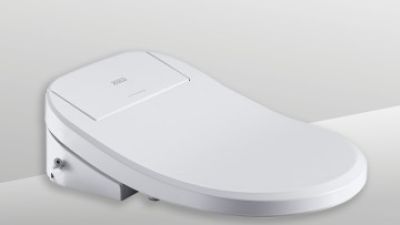
The OL-X102 smart heated bidet seats are designed to fit most standard U-shaped toilet bowls, providing an upgrade that can save space and avoid the expense of installing a complete smart toilet. Remote control and side-panel operation make the seats accessible for different user preferences and bathroom layouts. Their combination of added comfort and easier personal hygiene makes them suitable for residential projects as well as trade and wholesale offerings.
OEM/ODM cooperation, trade, and wholesale inquiries are welcome. Contact us for product details or other information, and we will respond promptly to questions and requests.
Conclusion
This article explores the Automatic Toilet Seat market, beginning with its definition, scope, and the technologies that enable features such as heated seating, adjustable washing, air drying, automatic flushing, and sensor-based operation. It also explains how leading manufacturers can be assessed using factors such as product quality, innovation, reliability, market reach, and customer support, while outlining the industry’s development across major regions.
The article then profiles ten leading manufacturers without focusing on brand names, comparing their product features and applications in residential, commercial, and hospitality settings. It concludes with emerging trends shaping the sector, including smarter controls, improved water and energy efficiency, more hygienic designs, and greater attention to accessibility and user comfort. Together, these topics provide a practical overview of the global market and the features that distinguish its leading products.